
Behind the Official Gaze: Decoding Xi Jinping's Diplomatic Persona
Behind the Official Gaze: Decoding Xi Jinping's Diplomatic Persona
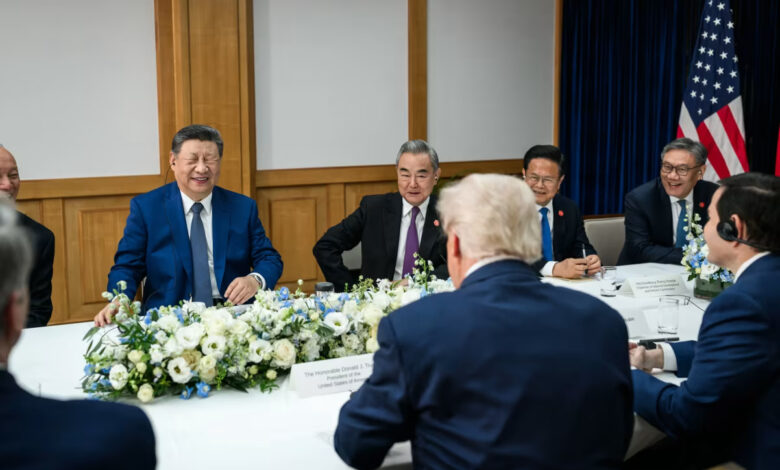
In the intricate world of international diplomacy, every gesture, every expression, and every photograph can carry significant weight. Leaders are not just individuals; they are symbols, and their public image is meticulously managed to convey specific messages to diverse audiences, both at home and abroad.
Recently, a fascinating contrast emerged in the portrayal of Chinese President Xi Jinping. While state media within China consistently presents him as a serious, unyielding, and supremely confident leader – a figure embodying stability and strength – images released by the White House during his diplomatic engagements painted a subtly different picture.
For over a decade, the narrative crafted around Xi Jinping for domestic consumption has emphasized his gravitas and unwavering resolve. This carefully cultivated image is central to reinforcing his authority and the Communist Party's control, projecting an aura of steadfast leadership vital for a nation navigating complex economic and geopolitical currents.
The images emanating from the White House, however, reportedly showcased moments of greater warmth, perhaps a lighter smile or a more relaxed posture. These glimpses of a less guarded Xi Jinping are not typically afforded to the Chinese public, whose perception is shaped by a tightly controlled media landscape that prioritizes a consistent, authoritative persona.
The Strategic Art of Image Management
The divergence in these visual narratives speaks volumes about the strategic deployment of public relations in global politics. Domestically, the unsmiling, resolute leader inspires confidence in his ability to steer the nation, while externally, a more genial demeanor can serve to soften China's image, foster goodwill, and facilitate constructive dialogue.
This duality highlights a common practice among global powers: tailoring a leader's public persona to resonate with specific audiences. What projects strength and stability internally might appear rigid or unapproachable on the international stage, where diplomacy often benefits from an air of affability.
The White House's decision to release these particular images can itself be interpreted as a strategic move. By presenting a potentially more approachable Xi, it could be an attempt to humanize the leader, perhaps fostering a more nuanced perception among Western audiences, or even subtly signaling a desire for a less confrontational relationship.
Perception vs. Reality
The contrast underscores the powerful role of media control in shaping national identity and international perception. For citizens within China, the state-sanctioned imagery defines their leader; for the rest of the world, diplomatic exchanges offer alternative, often unfiltered, perspectives.
This phenomenon encourages us to look beyond official narratives and consider the various facets of a leader's public life. It reminds us that every image is a curated message, designed to elicit a particular response from its intended viewer, making us active interpreters rather than passive consumers of news.
Ultimately, the ‘real’ Xi Jinping likely encompasses elements of both portrayals – the serious strategist and the diplomatic interlocutor. The distinction lies in which aspect is emphasized and for which audience, a testament to the sophisticated communication strategies employed at the highest levels of global governance.
These contrasting images offer a valuable lesson in media literacy, prompting us to question the narratives presented to us and to understand the underlying motivations behind their dissemination. It’s a subtle yet significant revelation in the ongoing dance between global powers.
References & External Links
- Global Diplomacy Watch: The Evolution of Xi Jinping's International Persona
- Asia Policy Review: State Media and Leadership Cultivation in China
- International Relations Journal: Visuals as Tools of Diplomacy
Tags
Xi Jinping, China, White House, Diplomacy, Public Image, State Media, International Relations, Political Leadership, Soft Power, Media Control
